Every issue, in plain words.
Each issue names the page, says what is wrong and gives the limit it broke: “Title is 69 characters (recommended: ≤60)”.
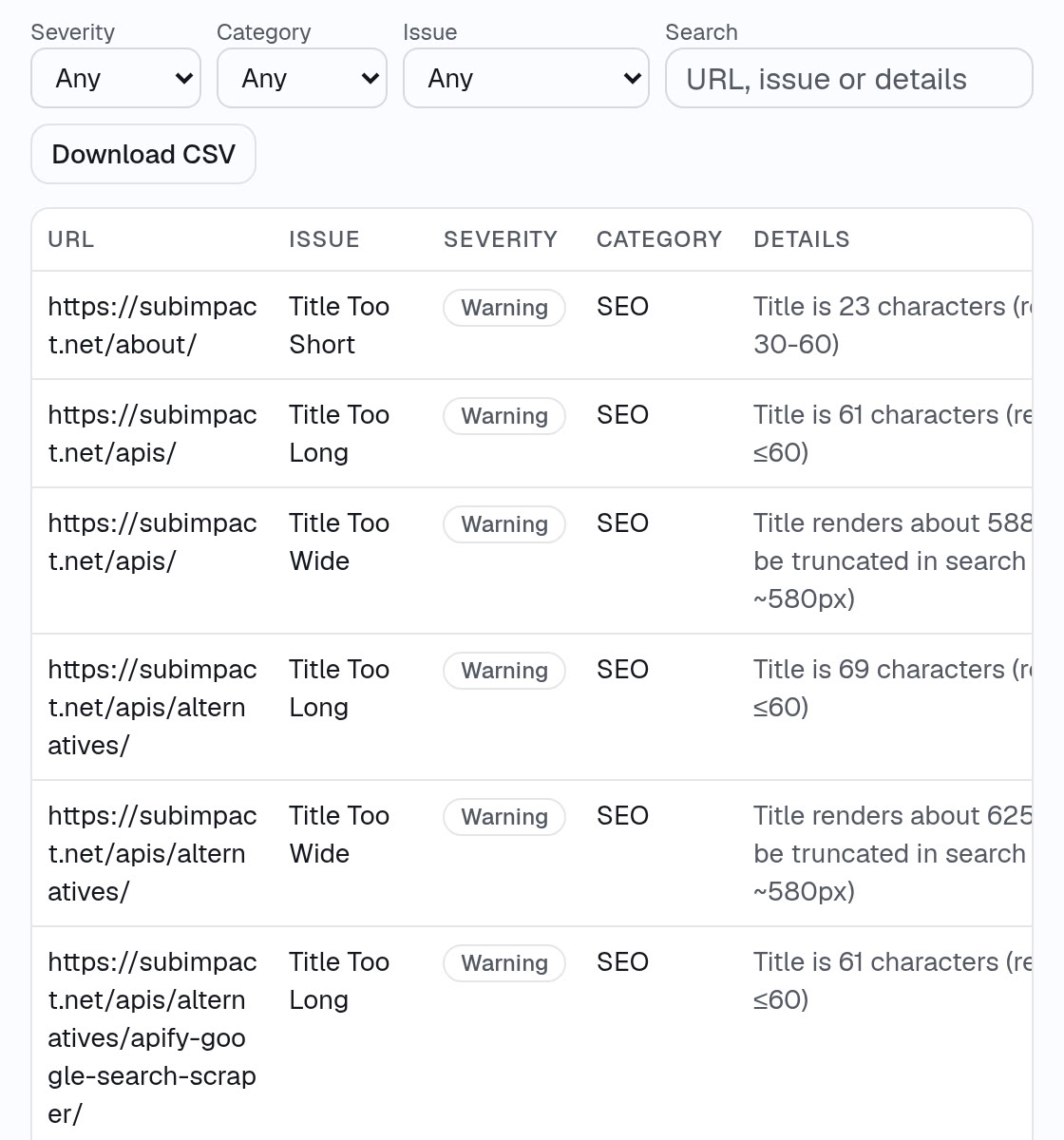
subSEO crawls the sites you own, finds what keeps search engines and answer engines from using them, and lists the fixes in order of impact.
Card required. Nothing is charged before day 8.
Under your pointer: the page
The same limits subSEO applies to every page it crawls.
Queued
Crawling
Finished
Each issue names the page, says what is wrong and gives the limit it broke: “Title is 69 characters (recommended: ≤60)”.
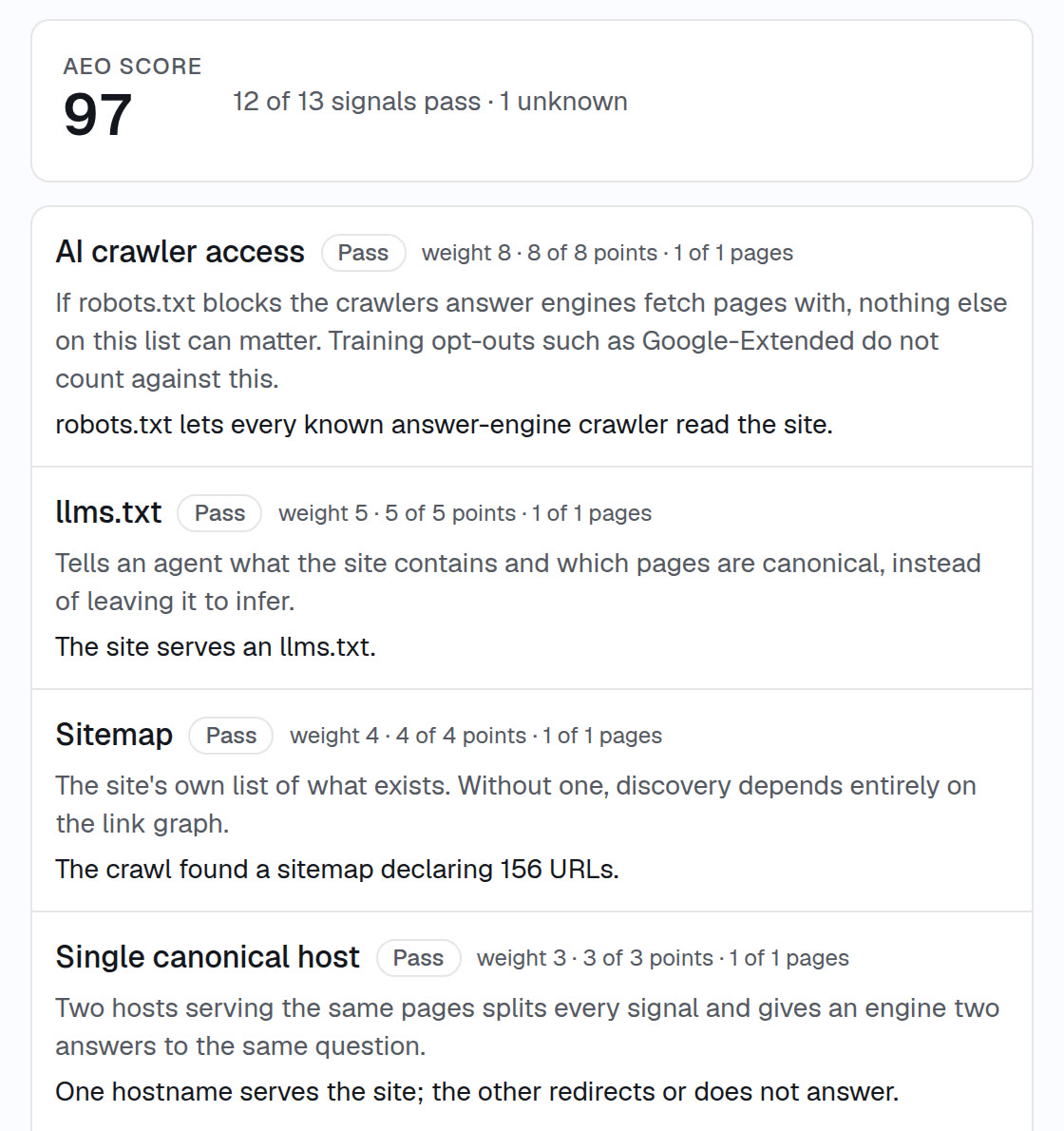
Fourteen signals that answer engines rely on, from robots.txt access to Q&A markup, each with its weight and what the crawl found.
Authors, outbound citations, structured data and HTTPS, measured across the whole crawl instead of guessed from one page.
subSEO writes the llms.txt that tells AI agents what your site holds. Read it, correct it, publish it.
A 50-page audit of any public site, for agencies and consultants. Twenty a month on Starter, a hundred on Pro.
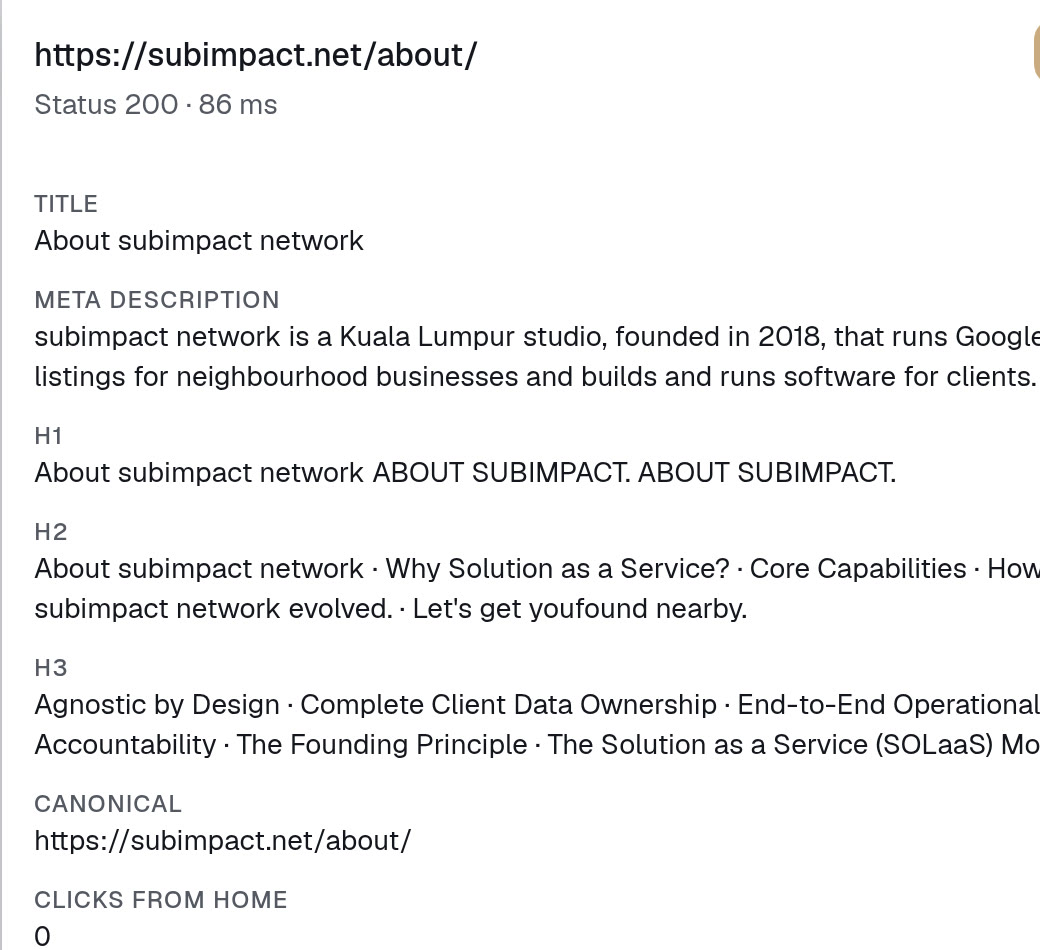
Title, description, headings, canonical and clicks from the home page for each URL, with the issues found on it.
Add a DNS TXT record, a meta tag or a small file. subSEO only crawls sites their owners control.
It names itself, follows your robots.txt and slows down when your server asks it to.
Issues come sorted by how many pages they touch. Crawl again when you have fixed them, or let Starter and Pro re-crawl on their own.
Signals, by weight
The weights add up to 100. Your AEO score is the share of eligible points your site earns.
What no crawl can show
Monthly, in RM
3 sites · 5,000 pages a month · 20 prospect audits · monthly re-crawl · 1 seat
15 sites · 25,000 pages a month · 100 prospect audits · weekly re-crawl · 3 seats · white-label PDF reports (coming soon)
To start, in RM
1 site · 500 pages · 3 prospect audits · card required, charged on day 8 unless you cancel
A crawl reserves its page limit when it starts and gives back what it did not use when it ends.
Why must I prove that I own the site? A full crawl requests every page of a site, so subSEO does it only for sites whose owners ask. Add a DNS TXT record, a meta tag or a small file; the check usually takes a minute.
Can I audit a site I do not own? Yes, with a prospect audit: up to 50 pages of any public site. Prospect audits have their own monthly count and do not use your page allowance.
What is subSEOBot? Our crawler. It identifies itself as subSEOBot with a link to seo.subimpact.net/bot, follows robots.txt, and waits when a server answers 429 or 503.
What if robots.txt blocks subSEOBot? The crawl stops at the start page, and the report shows the two lines to add: User-agent: subSEOBot, then Allow: /.
Does subSEO run JavaScript? No. It reads the HTML your server sends. Text that appears only after scripts run is not counted, and the report says so.
How long do you keep reports? The newest full report of each site stays complete for 35 days. Up to three older reports per site keep their issues and pages, without link detail, for 90 days. After that the summary and scores stay for two years. Prospect audits keep full detail for 14 days.
What counts as a page? Every URL fetched in a full crawl. A crawl reserves its page limit when it starts and gives back what it did not use when it ends.
What does the AEO score not tell me? Whether answer engines actually cite you. That needs asking the engines themselves; subSEO measures what your site makes possible.
How does the trial work? Seven days with a card on file. Cancel before day 8 and you pay nothing; otherwise the plan you chose starts on day 8.
Who makes subSEO? SUBIMPACT NETWORK, a Kuala Lumpur studio that has built and run software for clients since 2018.
Add your site, prove it is yours, and read the first report.